You send money home every month. You maintain an account back in the Philippines that your family depends on. You check your balance from a phone thousands of kilometers away, at odd hours, sometimes on weak WiFi. And every now and then, something goes wrong — a remittance doesn’t arrive, a family member can’t withdraw, a fee you didn’t expect quietly drains the balance.
Choosing the right bank is not a minor decision for an OFW. It affects how much your family receives, how easily they can access it, and how much control you keep over money you worked hard to earn.
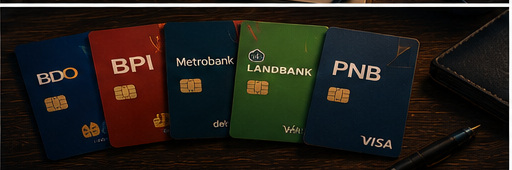
Here is a comparison of six banks that OFWs commonly use. Features and fees change. I-verify ang lahat ng figures sa opisyal na website ng bawat bangko bago kumilos.
1. BDO (Banco de Oro)
BDO is the most widely used bank by OFW families in the Philippines, and the main reason is simple: coverage. It has one of the largest ATM and branch networks in the country, including in provincial areas. If your family is in a city or a mid-sized town, there is likely a BDO ATM nearby.
For the OFW account holder, BDO offers an OFW Kabayan Savings account with no maintaining balance requirement. It comes with a passbook option and allows peso and dollar deposits. The online banking app works reasonably well for balance checking and intra-bank transfers, though some OFWs report the app feels dated compared to newer digital banks.
BDO accepts remittances through partner services including Western Union and many online transfer platforms. Verify current receiving fees and partner channels directly with BDO before setting up a recurring remittance arrangement.
2. BPI (Bank of the Philippine Islands)
BPI is often recommended for OFWs who want to maintain both a peso and a dollar account under the same bank relationship. Their BPI Direct accounts, including the Save-Up account, can be opened and managed online. For OFWs who want to keep some savings in US dollars to hedge against peso fluctuations, BPI’s dollar savings accounts are a practical option.
BPI’s online banking interface is considered among the cleaner and more stable ones in the Philippine banking landscape. The mobile app allows fund transfers, bill payments, and account monitoring. Branch network is large, though not as extensive as BDO’s in deep provincial areas.
Remittances can be received through BPI accounts via multiple channels. Confirm current partner remittance platforms and any receiving fees directly with BPI, as these are subject to change.
3. Metrobank
Metrobank is frequently mentioned by OFWs who prioritize dollar account access and trust a long-established name. Their OFW savings products allow both peso and foreign currency deposits, and the bank has historically maintained a strong relationship with the OFW segment.
Their branch network is solid in major cities and provinces. Online banking covers the core functions: checking balances, transferring funds, and paying bills. Mobile app functionality has improved in recent years.
For families receiving remittances in provinces, it is worth confirming the nearest Metrobank ATM or branch location. In some rural areas, BDO or Landbank may have better physical reach.
4. Landbank of the Philippines
Landbank is a government-owned bank and one of the few that has meaningful presence in rural and agricultural areas. For OFWs whose families live in municipalities where private banks have limited coverage, Landbank is often the practical choice.
Minimum maintaining balances are typically lower than private commercial banks, which matters for family members who are not actively managing large balances. The bank also handles government disbursements, which can be useful for family members receiving any form of government assistance.
Landbank’s digital banking features are functional but less polished than some private banks. For OFWs who prioritize physical accessibility for their family over app experience, Landbank often makes more sense than a flashier option with fewer local branches.
5. DBP (Development Bank of the Philippines)
DBP is a government development bank that has specific OFW-oriented products, including the OFW Reintegration Program. Beyond basic savings, DBP offers loan products designed for returning OFWs who want to start a business or buy property — features that are less common at standard commercial banks.
For OFWs who are thinking beyond simple remittance receiving and toward what happens when they come home, DBP is worth exploring. Their OFW accounts include insurance components in some packages. Verify current product availability, coverage details, and eligibility requirements at DBP’s official website, as product offerings change.
Branch network is smaller than BDO, BPI, or Metrobank, so for families in areas away from major cities, confirm physical access before opening an account here.
6. Maya (Digital Bank)
Maya is a fully digital bank — no physical branches, but also no maintaining balance requirement and no over-the-counter fees that traditional banks charge. For OFWs who already use digital payment apps, Maya is familiar. Their savings feature offers interest rates that are generally higher than traditional passbook savings accounts, as of 2026. Verify current rates directly at Maya’s website.
Maya works well for OFWs who want a secondary account: one where they can receive remittances or keep a portion of savings earning higher interest, while maintaining a traditional bank account for the family’s day-to-day ATM withdrawals.
The limitation is the same as all digital banks: no physical branches means family members who are not comfortable with apps can find it harder to access. It also means any account issues must be resolved through digital support channels, which can be frustrating when things go wrong across time zones.
No single bank is the best choice for every OFW. The right answer depends on where your family lives, how comfortable they are with digital tools, whether you want dollar accounts, and what features you need for the day you come home. The list above is a starting point, not a verdict. I-verify ang actual fees, maintaining balance requirements, at features sa opisyal na website ng bawat bangko bago magbukas ng account.
The bank that serves your family well is the one that matters most.