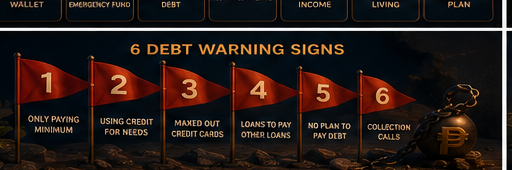
Debt problems rarely arrive all at once. They build slowly, through small decisions and quiet habits, until one day the situation is serious and you are not entirely sure how you got there. The warning signs were present the whole time. Most of us just learned not to look at them.
This is not a post about blame. I have been inside several of these signs myself. The point is not to feel worse about your situation. The point is to recognize where you actually are so you can take the first step from an honest place.
1. You are paying one debt with another
This is sometimes called debt cycling, and it is one of the clearest signs that your current income is no longer sufficient to cover your obligations. It looks like using your credit card cash advance to pay your personal loan, or taking out a new informal loan to settle a previous one.
The problem with this pattern is that it does not reduce your total debt. It rearranges it, usually while adding interest or fees on top. Each cycle leaves you with the same amount owed but less capacity to pay.
If you recognize this pattern in yourself, the first step is to stop adding new debt immediately, even if it feels like the only way to keep the current obligations moving. Then list every debt you have, with the interest rate and monthly due. You cannot fix what you cannot see clearly.
2. You are hiding your debt from your family
There is a particular kind of exhaustion that comes from carrying debt in secret. You manage the numbers alone, you deflect questions about money, and you rehearse explanations in case someone looks at your phone.
Hiding debt from family is usually a sign of shame, and shame makes the problem worse, not better. It delays the honest conversations that would actually help. It also means you are carrying the weight without any support.
This one is hard because Filipino family dynamics are complicated. Telling your spouse or parents about debt can feel like admitting failure. But the longer the secret is kept, the bigger the gap becomes between the situation they think you are in and the one you are actually in.
The first step here is not a big announcement. It is telling one person you trust the truth. That one conversation changes the weight of the thing.
3. You are regularly missing payments
Missing a payment once because of a cash flow gap is a problem. Missing payments regularly means your monthly outflow exceeds your monthly income after basic living expenses — and that gap is not closing.
Regular missed payments also trigger penalties and interest, which grow the total debt, which makes future payments harder. Most loan agreements in the Philippines charge late payment fees on top of the monthly interest. Over several months, these additions are significant.
If this is your situation, the first step is to contact your lenders before they escalate. Many banks and lenders — including SSS and Pag-IBIG — have restructuring or penalty-waiver programs for borrowers in difficulty. These are easier to access when you initiate contact than when the account has already been referred for collection.
4. You do not know your total debt amount
This one is more common than most people admit. You know roughly what you owe on each account, but you have never sat down and added it all up. The actual number feels too uncomfortable to look at directly.
Not knowing your total debt is a way of managing anxiety in the short term. It allows you to focus only on the next due date without confronting the full picture. But it also means you cannot make a real plan. You cannot prioritize which debt to pay down first, you cannot calculate a realistic timeline, and you cannot see if your current repayment pace is actually making progress.
The first step is simple and takes about twenty minutes. List every debt. The creditor, the current balance, the interest rate, the monthly minimum. Add them up. Write down the number. That number, however uncomfortable, is the beginning of a real plan.
5. You are avoiding calls and messages from lenders
This is one of the most recognizable signs, and one of the most quietly corrosive. The phone rings and you know who it is. You do not answer. The messages come in and you leave them unread. You tell yourself you will deal with it later.
Avoidance does not pause the account. It adds days and weeks to the delinquency while the balance grows and the lender moves toward more serious collection methods. In the Philippines, collection harassment from some lenders — particularly digital lending apps — can be aggressive and intrusive. Avoiding the lender does not stop this process. It accelerates it.
The first step is to answer or respond at least once to understand the actual status of your account. Many lenders, when contacted, will discuss a payment plan rather than immediately escalating. You have more options before an account is formally in default than after.
6. Your debt is affecting your sleep and your relationships
Financial stress does not stay in the numbers. It shows up in how you sleep, how you respond to people you love, and how much mental space is left for anything else. If you are waking up at 3am calculating how to cover next month’s payments, or if you are snapping at your family over small things, or if you feel a constant low-level dread that follows you through the day — that is your debt affecting your life beyond the numbers.
This sign matters because it means the situation has moved beyond a financial problem into a health and relationship problem. Chronic financial stress is linked to anxiety, depression, and relationship breakdown. None of that makes the debt easier to manage.
The first step here is acknowledging that the mental weight of debt is a real cost, not just an emotional inconvenience. If you have access to any kind of support — a trusted person to talk to, a financial counselor, a reputable debt management service — that investment in your mental clarity will make every other financial decision sharper.
None of these signs mean it is too late. They mean it is past time to start.